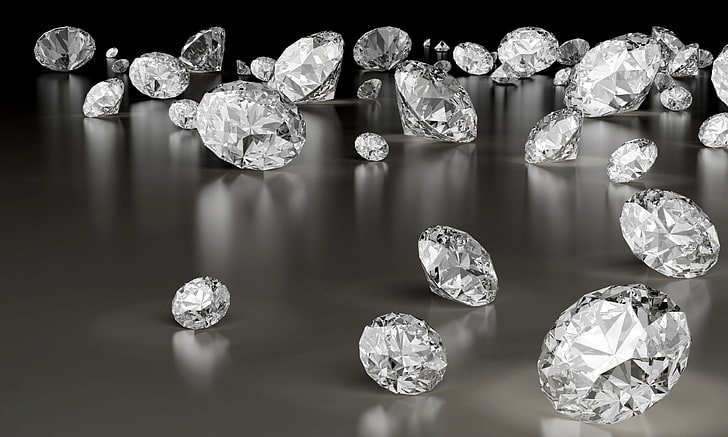
Finding the best lab-grown diamonds in Malaysia is less about chasing the largest stone or the highest grades on a certificate and more about understanding how different quality factors work together. Two diamonds with similar carat weights can look noticeably different once cut quality, proportions, colour and clarity enter the picture.
For engagement rings and other fine jewellery, buyers should judge a lab-grown diamond by both its grading information and its appearance. Certification helps verify important characteristics, but the way a diamond handles light, looks on the hand and works with its setting matters just as much.
What Actually Makes a Lab-Grown Diamond a Good Choice?
Lab-grown diamonds have essentially the same crystal structure and fundamental physical characteristics as mined diamonds. Their key distinction is origin: they are created under controlled laboratory conditions rather than extracted from the earth.
That does not mean every lab-grown diamond has the same quality.
Individual stones can differ in cut, colour, clarity, carat weight, proportions and visible characteristics. Buyers researching the best lab grown diamonds MY should therefore compare individual diamonds rather than treating “lab-grown” as a quality grade by itself.
A well-chosen diamond should balance visual performance with the buyer’s priorities. Someone who values maximum sparkle may focus heavily on cut, while another buyer may care more about face-up size, shape or a particular engagement-ring design.
Put Cut and Light Performance Before Carat Weight
Carat measures weight, not beauty or physical width. This distinction becomes especially useful when comparing diamonds online.
A heavier diamond does not automatically look larger from above. Some of its weight may be carried in depth rather than spread across the visible surface. Dimensions can therefore reveal information that carat weight alone cannot.
Cut quality also influences how efficiently a diamond returns light to the viewer. With round brilliant diamonds, for example, proportion and facet relationships contribute significantly to brightness and sparkle.
For fancy shapes such as oval, pear, emerald, radiant and cushion cuts, buyers should look beyond a single grading label. Outline, symmetry, dimensions and the individual pattern of light and dark areas can strongly influence appearance.
This is one reason videos, detailed photographs and clear measurements are valuable when creating a shortlist.
Colour and Clarity Do Not Need to Be Maximised
Higher laboratory grades can increase the man made diamonds on paper without always producing an equally noticeable improvement once the diamond is worn.
Diamond colour describes how much body colour is visible in a stone. How noticeable that colour appears can depend on the diamond’s shape, size, setting and surrounding metal.
Clarity refers to internal characteristics called inclusions and external characteristics known as blemishes. Instead of automatically seeking the highest clarity grade available, many buyers benefit from asking a more practical question: are any inclusions distracting when the diamond is viewed normally?
An eye-clean diamond, where inclusions are not readily noticeable without magnification, may provide a better balance between appearance and budget than paying for microscopic differences that are difficult to see.
The same principle applies to colour. The right grade is the one that produces the appearance the buyer wants within the complete ring design.
Certification Makes Comparisons More Reliable
An independent grading report gives buyers a structured way to compare diamonds. Depending on the grading laboratory and diamond, the report may identify characteristics such as carat weight, measurements, colour, clarity and other grading information.
Certification should not be treated as a substitute for examining the actual diamond. A report describes measurable or assessed characteristics, while images and videos can reveal qualities such as outline, visual balance and how attractive a fancy-shaped stone appears.
When comparing several certified diamonds, check that the report details correspond with the stone being offered. Certification information is particularly useful when two options look similar but differ in grade or dimensions.
Shape Changes More Than the Style
Diamond shape affects visual personality, face-up appearance and the way the stone works with different ring settings.
| Diamond shape | Visual character | Common design consideration |
|---|---|---|
| Round | Bright, balanced and classic | Works with most engagement-ring styles |
| Oval | Elongated and elegant | Outline and light pattern deserve close inspection |
| Emerald | Clean, geometric appearance | Clarity characteristics may be easier to notice |
| Cushion | Soft corners with varied faceting | Different cushion outlines can look quite different |
| Pear | Distinctive tapered silhouette | Symmetry strongly influences visual balance |
Personal preference should lead the decision. An oval diamond is not inherently better than a round diamond, and an emerald cut is not automatically more sophisticated than a cushion. They produce different visual effects.
Trying different shapes on the hand, even before choosing an exact diamond, can prevent buyers from paying for specifications in a shape they ultimately do not enjoy wearing.
Match the Diamond to the Ring Setting
A diamond should be evaluated as part of the finished piece rather than in isolation.
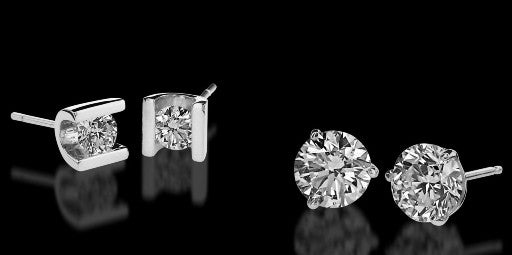
A solitaire places almost all visual attention on the centre stone, making its shape and proportions particularly noticeable. Halo designs can add visual presence around the centre diamond, while pavé settings introduce additional sparkle along the band.
Metal colour also changes the overall impression. White metals can create a continuous bright appearance around a colourless-looking stone, while yellow or rose-toned metals introduce warmer contrast.
Practical wear matters too. Someone with an active daily routine may prefer a setting that offers greater protection around exposed parts of the diamond. Shapes with pointed ends or corners deserve particular attention to how securely those areas are protected.
Avoid Paying for Numbers You Cannot Appreciate
One of the easiest buying mistakes is assuming every higher grade produces a visibly better diamond.
Instead, compare diamonds side by side wherever possible. Look at their face-up dimensions, overall brightness, outline and any visible inclusions. For elongated shapes, consider how the length-to-width relationship affects the silhouette rather than choosing a proportion simply because someone else considers it ideal.
Then consider the complete budget. Spending heavily to maximise colour or clarity may leave less room for the ring setting, precious metal, craftsmanship or other design details that can have a substantial effect on the finished jewellery.
For Malaysian shoppers, a specialist such as NOVITA Diamonds can serve as one reference point when comparing lab-grown diamond engagement rings, loose diamonds and setting options available for the local market.
Choose the Finished Ring, Not Just the Certificate
The strongest shortlist usually comes from combining objective grading information with visual judgement. Start with a preferred shape and realistic budget, compare certified stones, inspect their dimensions and appearance, and then consider how each diamond will sit within the chosen setting.
A laboratory report can tell you a great deal about a diamond, but it cannot decide which stone looks most appealing to you. The better purchase is the one in which cut, size, colour, clarity, design and cost make sense together rather than the diamond that simply carries the highest collection of grades.